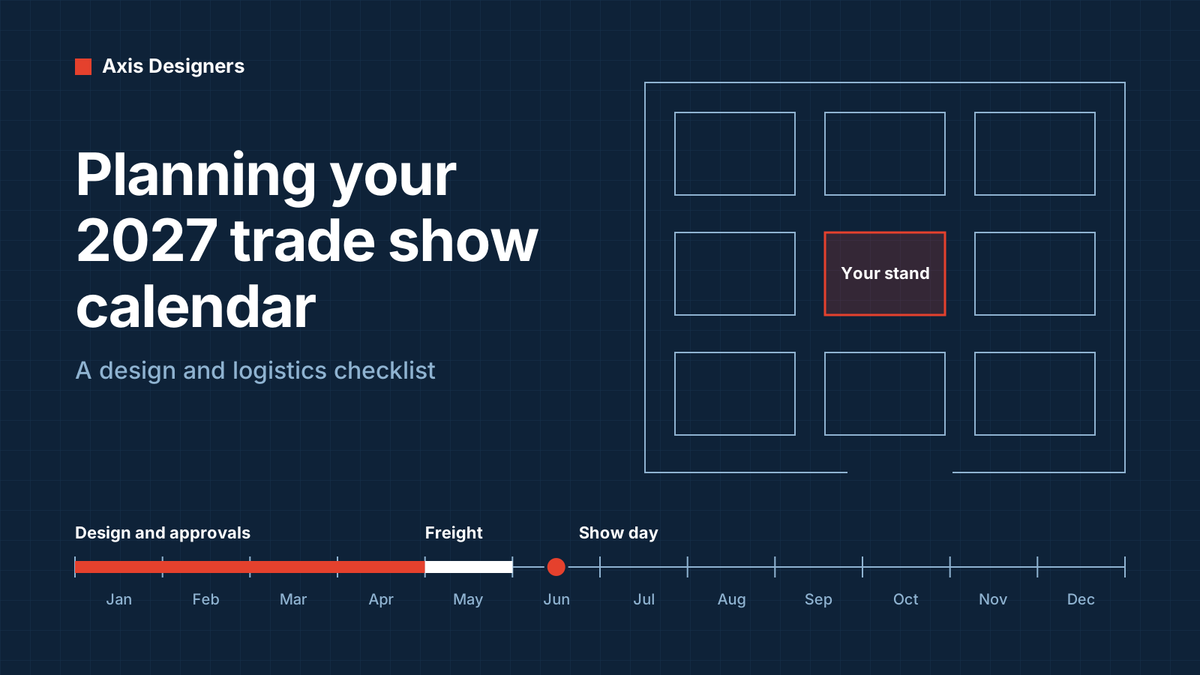
Planning Your 2027 Trade Show Calendar: A Design and Logistics Checklist
The best trade show results are decided months before the doors open. Use this design and logistics checklist to plan your 2027 exhibition calendar with fewer surprises and a stronger return on every stand.
Year-end is when most brands lock their exhibition calendar for the next year. It is also the best moment to fix the problems that cost money at this year’s shows: rushed designs, last-minute freight and stands that were built around the booth rather than the audience. This checklist covers what to settle now so 2027 runs smoothly.
1. Pick your shows by objective, not habit
Before booking space, ask what each show is for. Lead generation, product launches, distributor meetings and brand visibility all need different stands. Rank your shows by business impact and decide which ones deserve a custom build, which can use a reusable modular system, and which you can skip.
2. Lock your stand size and location early
Booth position changes everything. Corner and island stands allow open, multi-sided designs, while inline stands need a strong front face. Confirm your size and floor position as soon as the organiser allows, because your design brief depends on it.
3. Start design 4 to 6 months out
A strong stand needs time for concepts, revisions, technical drawings and organiser approval. For international shows, start even earlier. Late design work almost always means compromises in materials, finish and budget.
4. Check organiser rules and approvals
Every venue has its own limits on stand height, structure, flooring, electrical load and fire safety. In Europe and the Middle East, drawings often need formal approval before you can build. Collect each organiser’s exhibitor manual at the start and design within its rules.
5. Plan logistics backwards from show day
Work backwards from the installation date. Allow for production, quality checks, packing, shipping, customs clearance and on-site build time. For overseas shows, add buffer days for freight delays. Decide early whether the stand is built locally or shipped, since this affects both cost and risk.
6. Design for reuse across shows
If you attend several fairs a year, build a stand system that can be reconfigured: the same core structure with new graphics, layouts or sizes. This cuts cost per show and keeps your brand consistent across markets.
7. Plan the on-stand experience
A stand is more than walls and graphics. Think about product displays, meeting areas, storage, lighting, digital screens and how visitors will move through the space. Brief your staff on the stand’s purpose so every conversation supports it.
8. Set your budget with a contingency
Include design, build, freight, installation, dismantling, organiser fees and a 10 to 15 percent contingency. Unplanned costs show up on almost every project, and a buffer keeps them from derailing your plans.
9. Plan the follow-up before the show
Decide how leads will be captured, qualified and followed up before you arrive. The best stand loses its value if enquiries sit untouched after the fair.
Plan early, exhibit better
A trade show calendar planned in November is calmer, cheaper and better designed than one planned in March. If you are mapping your 2027 exhibitions and need a design partner, the team at Axis Designers can help from first concept to final installation. Get in touch to start the conversation.
Write us at info@axisdesigners.com and promotion@axisdesigners.com